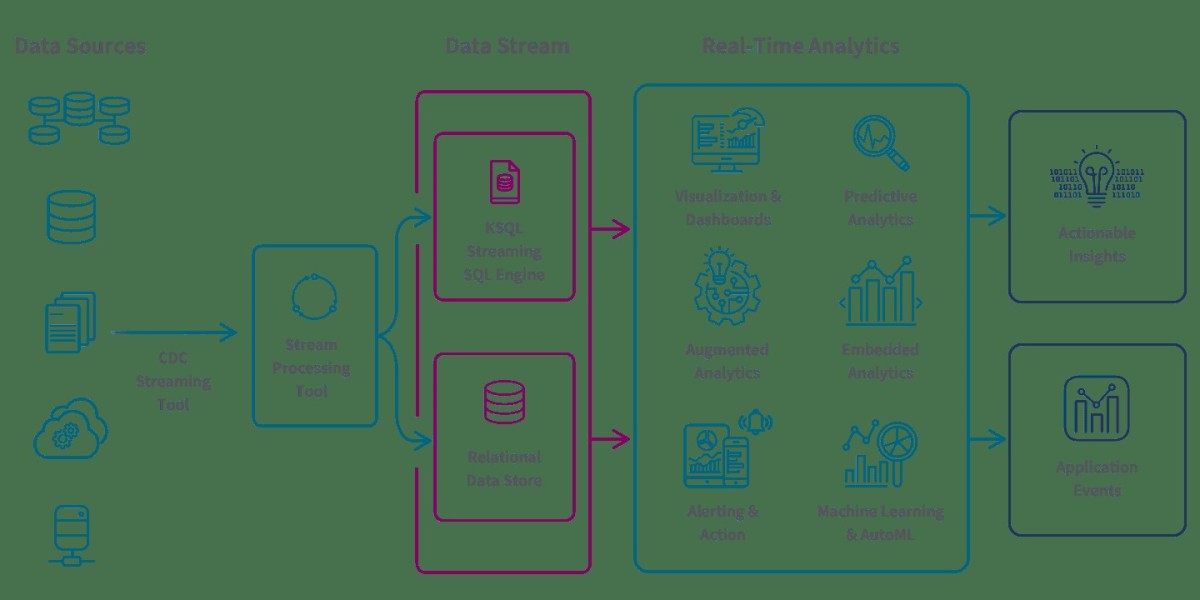
For a new startup, entering the formidable global market for real-time analytics is an exceptionally challenging endeavor, as the landscape is dominated by the massive data platforms of the hyperscale cloud providers and a handful of heavily-funded "data cloud" giants. A pragmatic analysis of effective Real-Time Analytics Market Entry Strategies reveals that a direct, head-on attempt to build a new, general-purpose data warehouse or data lakehouse platform is a near-impossible, capital-intensive task. The most successful entry strategies for newcomers are almost always built on a foundation of deep, architectural specialization. This involves identifying a specific, high-pain-point problem within the real-time data workflow that is not being perfectly solved by the major platforms and building a best-in-class, purpose-built solution for that single niche. The Real-Time Analytics Market size is projected to grow USD 151.17 Billion by 2035, exhibiting a CAGR of 10.31% during the forecast period 2025-2035. The ever-growing demand for lower latency and higher concurrency ensures that such technological niches are always emerging, providing opportunities for innovative startups.
One of the most powerful and proven entry strategies is to build a new type of database that is architecturally superior for a specific real-time use case. While the major data platforms like Snowflake and BigQuery are excellent general-purpose analytical databases, they are not always optimized for the extreme low-latency query performance required by user-facing, real-time applications. A new entrant can succeed by building a database from the ground up that is designed for this one specific purpose. Companies like Rockset (with a focus on real-time indexing) and Tinybird (with a focus on real-time APIs) have successfully entered the market with this strategy. Their competitive advantage is their ability to deliver sub-second query performance on streaming data, a level of performance that is difficult to achieve with a traditional data warehouse. They target a specific developer persona who is building a real-time feature, such as a live dashboard or a personalization engine, and they win by offering a tool that is simply faster and easier to use for that specific job.
Another highly effective entry strategy is to focus on a specific open-source technology and build a superior commercial offering around it. The real-time analytics space has a number of powerful open-source projects, such as Apache Druid and ClickHouse. A new company could enter the market by offering a fully managed, cloud-based, "as-a-service" version of one of these technologies. The strategy is to take a powerful but complex open-source tool and make it easy to consume, handling all the operational complexity of deploying, managing, and scaling it on behalf of the customer. ClickHouse Cloud is a prime example of this strategy. This allows the new company to leverage the credibility and community of the open-source project while building a valuable, recurring-revenue business. A third strategy is to focus on the "data pipeline" itself. A new entrant could build a best-in-class tool for real-time data integration or transformation (a "streaming ETL" tool), becoming a critical piece of plumbing that feeds data into the major analytics platforms. In all these cases, the key is to be a deep specialist, not a generalist, and to solve one hard technical problem better than anyone else.
Top Trending Reports -