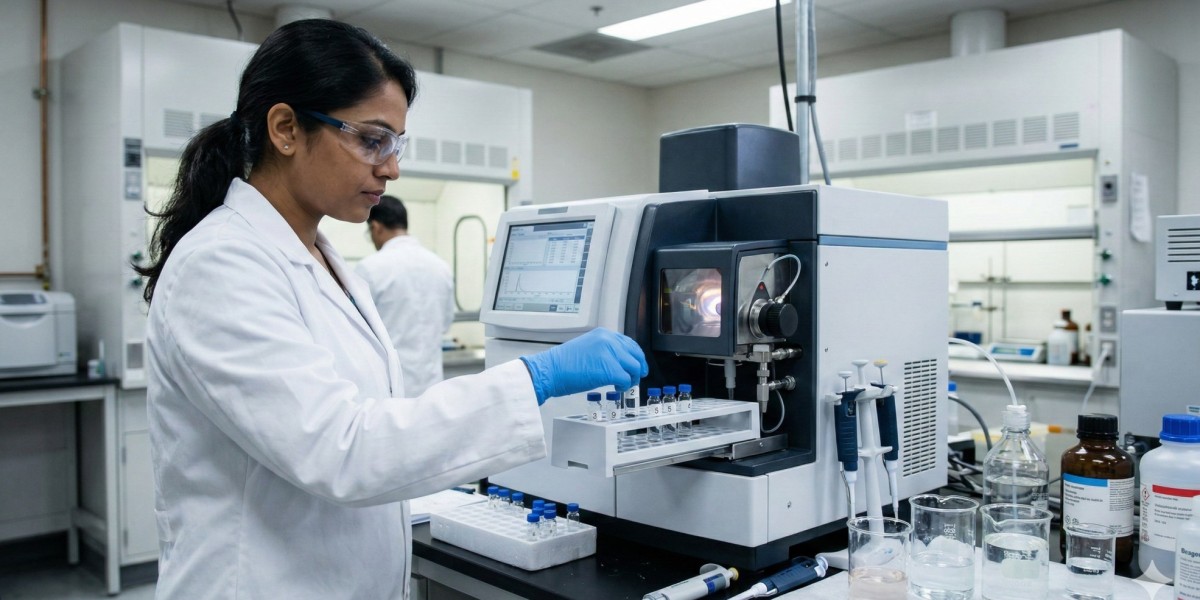
The global public health and industrial safety landscape of early 2026 is defined by an uncompromising transition toward comprehensive toxicological profiling and the mitigation of bioaccumulative risks. Heavy metal testing—utilizing gold-standard technologies like Inductively Coupled Plasma Mass Spectrometry (ICP-MS) and Atomic Absorption Spectroscopy (AAS)—has emerged as a foundational technology in this environment. Valued for its unique ability to identify acute and chronic exposure in biological samples, it is essential for the diagnosis of heavy metal toxicity and the monitoring of occupational health. As the medical sector faces increasing pressure to address the rise in chronic diseases linked to environmental pollutants, the role of high-fidelity blood and urine analysis has become paramount. These tests are no longer viewed as niche clinical assessments but as engineered "diagnostic-safeguards" that ensure the physiological integrity of populations in an increasingly industrialized world.
According to a recent report by Market Research Future, the Heavy Metal Testing Market is witnessing a transformative era of growth driven by the expansion of the global clinical diagnostics, environmental monitoring, and pharmaceutical analysis sectors. The global industry is projected to grow from USD 28.63 billion in 2025 to approximately USD 56.02 billion by 2035, exhibiting a robust compound annual growth rate (CAGR) of 6.94%. This trajectory is a central focus of the latest Heavy Metal Testing Market Forecast, which identifies Environmental Monitoring as the largest application segment, while the Food Safety segment is emerging as the fastest-growing niche. Geographically, North America remains the largest market for heavy metal testing, driven by stringent regulatory compliance, while the Asia-Pacific region is emerging as the fastest-growing hub due to rapid industrialization and rising groundwater safety concerns.
Looking toward 2035, the market is poised to be redefined by "High-Resolution Point-of-Care (POC) Innovation" and the expansion of the "portable-testing-kit" niche. We are seeing a significant move toward the development of rapid, app-based testing tools that allow non-specialists to perform initial screenings for lead or arsenic in the field, helping communities align with tightening global "net-zero-toxin" goals. Additionally, the move toward "AI-Integrated Elemental Fingerprinting"—where machine learning correlates trace metal signatures with specific environmental sources—is helping the industry achieve its long-term objective of source-specific pollution control. By 2035, the market will likely be defined by Diagnostic Integrity, providing the essential, low-impact, and high-fidelity analytical foundations required to support a more technologically advanced and ecologically responsible global health infrastructure.