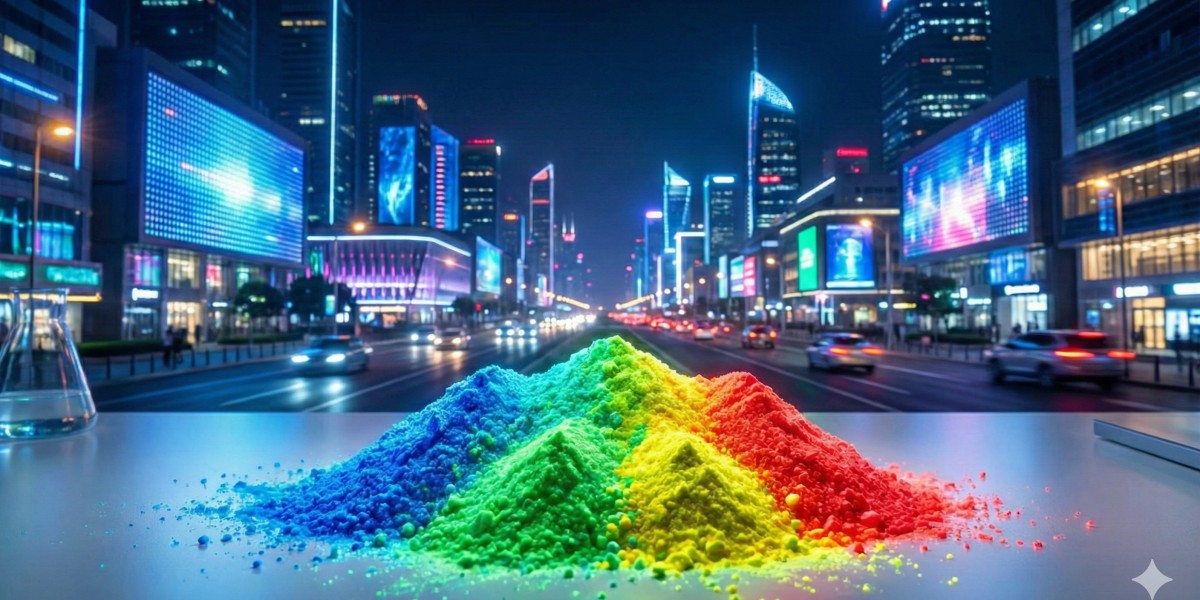
In the high-tech illumination landscape of early 2026, the demand for precise color rendering and energy-efficient light conversion has positioned photo-luminescent materials at the heart of the global electronics industry. LED phosphors—specialized chemical compounds that absorb blue or UV light and re-emit it as visible white light—have moved beyond basic lighting to become the definitive enablers of high-fidelity displays and advanced automotive optics. As the global transition toward "Human-Centric Lighting" (HCL) accelerates, the ability to engineer phosphor blends that mimic natural sunlight—supporting circadian rhythms while maintaining high luminous efficacy—is no longer a specialized feature but a foundational industrial requirement for residential and commercial infrastructure.
According to a recent report by Market Research Future, the LED Phosphor Market is witnessing a historic surge in adoption as manufacturers transition to next-generation narrow-band and quantum-dot technologies. The industry is projected to grow from USD 7.957 billion in 2025 to USD 17.39 billion by 2035, exhibiting a robust compound annual growth rate (CAGR) of 8.13% during the forecast period. This growth is a central theme in recent LED Phosphor Market Research, which highlights the decisive shift toward Nitride and Silicate phosphors. These materials are prized for their superior thermal stability and ability to withstand the high drive currents required for the intense brightness of modern automotive headlights and high-density micro-LED displays.
Looking toward 2030, the market is poised to be redefined by "Spectral Customization" and the expansion of the horticultural and medical lighting niches. We are seeing the development of "Full-Spectrum" phosphors specifically designed for indoor farming, which can be tuned to optimize photosynthesis and crop yield. Additionally, the move toward "Cadmium-Free" quantum dot hybrids is helping the display industry meet stringent environmental regulations while delivering the near-perfect color accuracy required for 8K television panels. By 2035, the LED phosphor market will be a hallmark of Sustainable Brilliance, providing the essential, high-performance, and increasingly eco-friendly materials required to support a more vibrant and energy-efficient global society.