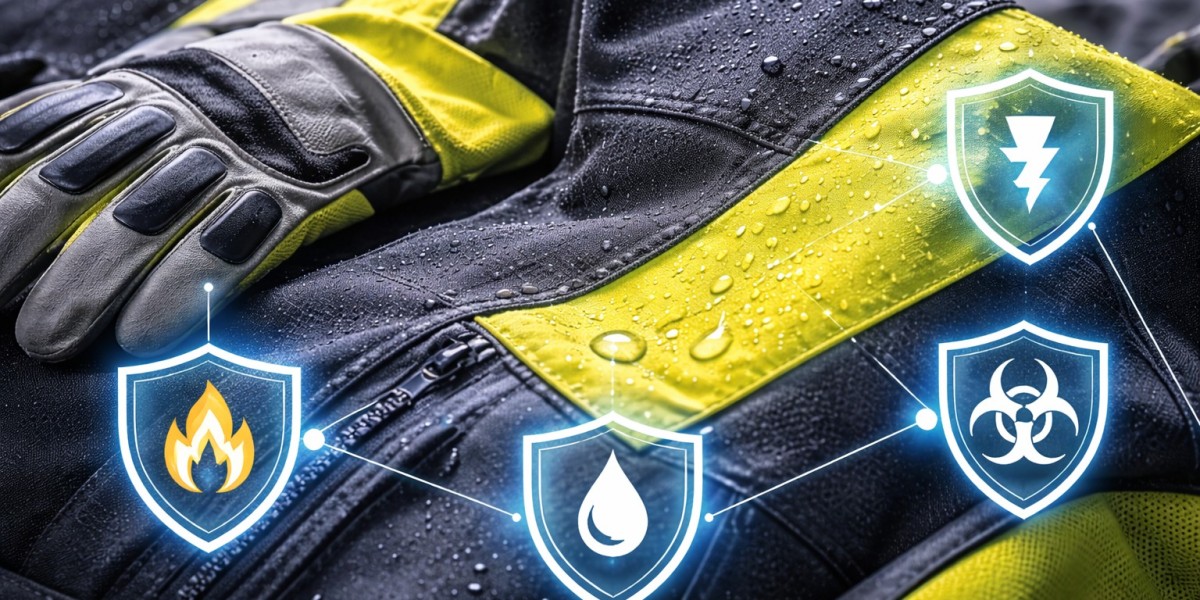
Workplace safety has become a central priority across industrial and service sectors worldwide. Governments, regulatory bodies, and employers are strengthening safety frameworks to reduce occupational hazards and improve worker protection, directly influencing demand for advanced protective textiles.
The Personal Protective Textile Market is strongly shaped by regulatory compliance requirements. Safety standards governing fire resistance, chemical exposure, biological protection, and mechanical durability are becoming more stringent. These regulations compel industries to adopt certified protective textiles that meet or exceed mandated performance benchmarks.
Occupational health agencies across regions are updating guidelines to address emerging risks. Industries such as oil and gas, chemicals, mining, and healthcare operate in environments where exposure hazards are unavoidable. Protective textiles act as a critical barrier, ensuring compliance with worker safety mandates while minimizing accident-related downtime.
Certification and testing play a vital role in market dynamics. Protective textiles must undergo rigorous assessments for tensile strength, thermal insulation, permeability, and resistance properties. Manufacturers investing in accredited testing and compliance capabilities gain credibility and long-term contracts, particularly in regulated industries.
Employer liability considerations further reinforce demand. Organizations increasingly recognize that investing in certified protective textiles reduces workplace incidents, legal risks, and compensation claims. This proactive approach supports consistent procurement cycles and long-term supplier relationships.
Globalization of safety standards is another important trend. Multinational companies seek uniform protective solutions across operations in different regions. This harmonization encourages adoption of high-quality protective textiles that meet international benchmarks, supporting market expansion.
Technological integration enhances regulatory compliance. Advanced coatings, layered textile structures, and hybrid fabrics allow manufacturers to achieve multiple protection standards within a single garment. This reduces the need for multiple layers while improving comfort and usability.
According to a recent report by Market Research Future, the Personal Protective Textile Market continues to expand as regulatory frameworks and safety mandates evolve globally. Broader insights from Textile Fabrics Market Research further emphasize the role of compliance-driven demand in shaping textile innovation.
As regulations grow more comprehensive and enforcement becomes stricter, protective textiles will remain indispensable. Compliance-focused innovation will be a defining factor in sustaining long-term market growth.