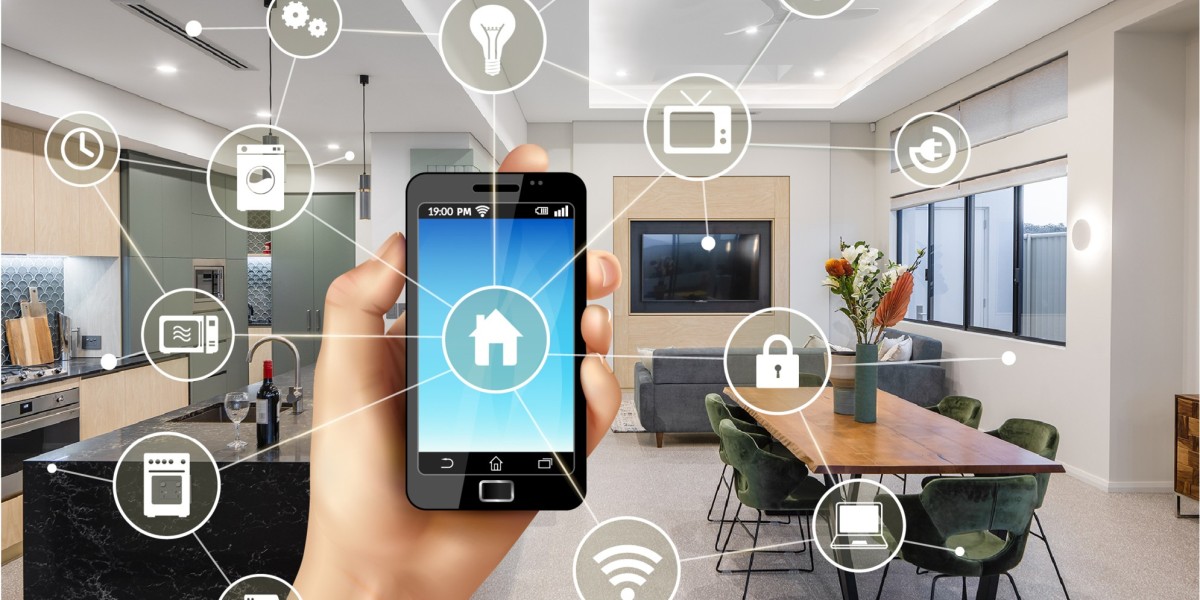
The way users interact with and control their increasingly complex connected homes has been fundamentally redefined by the rise of voice assistants and their physical embodiment in smart speakers and displays, establishing a new paradigm for human-computer interaction in the home. A market analysis focused on the control interface of the smart home market reveals that voice has emerged as the most natural, intuitive, and preferred method for managing a smart home ecosystem, acting as the central hub that unifies disparate devices. Key points related to the smart home market highlight the pivotal role of these voice platforms. Devices like Amazon's Echo (powered by Alexa), Google's Nest Hub (powered by Google Assistant), and Apple's HomePod (powered by Siri) have become the primary user interface for the home. The key players in this space are these three technology giants, who are engaged in a fierce platform war to become the "operating system" for the home. The future in the smart home market is one where these assistants become even more intelligent and proactive. This battle for the central hub is most intense in North America, which is the most mature market for voice assistants, with Europe and the English-speaking parts of APAC following closely behind.
The competitive landscape for voice assistants is a fierce three-way race between these key players, each with a distinct strategy and set of advantages, a key point for understanding the market's structure. Amazon's Alexa was the first to market and has maintained a commanding lead in market share by pursuing a strategy of openness and ubiquity. Amazon made it incredibly easy for third-party device manufacturers to integrate with Alexa, resulting in the largest ecosystem of "Works with Alexa" compatible devices. Google, a key player leveraging its unparalleled strength in search and AI, has focused on making its Assistant more conversational and contextually aware. Apple's Siri, a key player within its own ecosystem, competes on a platform of tight integration with its other products and a strong commitment to user privacy. The future in the smart home market will be defined by the outcome of this platform war, as a consumer's choice of their first smart speaker often locks them into that ecosystem. The smart home market size is projected to grow USD 387.22 Billion by 2035, exhibiting a CAGR of 10.69% during the forecast period 2025-2035. The growth of this market is directly tied to the expansion of these voice-controlled ecosystems, which are also gaining traction in the multilingual markets of South America and the MEA.
The future of voice control in the smart home is moving towards a more intelligent, proactive, and "ambient" experience, a key point for the next generation of the technology. The current model, which relies on a user speaking a specific "wake word" followed by a direct command, will evolve into a more natural and conversational interaction. The future will see key players use advanced AI to enable their assistants to understand context better, handle more complex commands, and even infer user intent without explicit instruction. For example, an assistant might recognize the sounds of a baby crying and proactively suggest playing a lullaby. The technology is also becoming more distributed, moving beyond a central speaker to be embedded in a wider range of devices, providing access to voice control in every corner of the home. However, this proliferation of always-on microphones also magnifies consumer concerns about privacy, a major issue in regions like Europe. The future success of these key players will depend on their ability to build and maintain user trust through transparent privacy controls and on-device processing. The adoption of voice assistants is also growing rapidly in APAC, driven by local language support from regional tech giants.
In summary, the key points related to voice assistants highlight their role as the central control hub and primary user interface for the modern smart home. The market is defined by a fierce platform war between the key players: Amazon, Google, and Apple. The future in the smart home market for voice is a more proactive, conversational, and ambient computing experience, powered by advanced AI. This global trend, led by the mature markets of North America and Europe, is fundamentally changing how humans interact with technology in their homes, with rapid adoption and unique use cases emerging in APAC, South America, and the MEA as well, making voice the undisputed king of the smart home interface.
Top Trending Reports -
South Korea Mixed Reality Industry